Saturday, November 21, 2009

Influences in fashion: Film

Fashion and film have had on ongoing dialogue since it’s early inception. Both reflect society’s culture, economic climate and views on society. Both rely on each others contributions to society to provide the creative energy to move the dialogue forward.
Clothes are never a frivolity: they always mean something. James Laver
“Filmmakers aspire to seduce.” They want to tell a story. Clothing helps convey the story (Slipper & the Rose). It helps with the development of the film’s character (Charlie Chaplin’s Tramp). It can provide motivation and inspiration for story, plot and momentum in movie narrative forward (Devil Wears Prada). The audience is there to be receptive to that story with hopes of being enmeshed in the visual experience as well as entertained or informed. They want to escape their present environment to learn, laugh, feel an emotion or find a new understanding in the dark, quiet, and safe walls of the theater.
Film making dialogue with costume and fashion had it’s origins in New York. Adolph Zukor (founder of Paramount) bought the rights to La Reine Elizabeth (1912). This early film starred Sarah Bernhardt – a stage legend. To convey the story, Zukor hired couture designer Paul Poirot to convey the story of the English Queen. Poirot, designer that he was, presented the audience with an ultra lavish, exotic Italian Renaissance costume epic. Americans made the discovery that films were no longer a cheap nickelodeon pastime. They were and could be considered, in fact, an art.
Clothes, clothes, clothes — everybody knows, you can’t get on in the pictures game — without clothes, clothes, clothes. Nance Mode, 1918, Motion Picture Magazine
The US at this time was primarily agricultural and rural. Besides entertain, film was a means to really enlighten and inform in illiterate population. The stars of these films became America’s royalty. The film industry embraced this as a method to promote the film. The star’s wardrobe was a means to market the film, elevate the star’s status & and promote this whole experience thus ensuring a good return on the investment and provide a momentum for the next film. Besides promoting the grandness, films used costumes and clothing to legitimize the film experience. One can’t forget that prior to the GI Bill after WWII most of America was illiterate, rural, and somewhat back ward. When this changed, so did movies (more on this later). This was a new media and viewed with much skepicism regarding it’s relevance. It was, and by some still is, corrupting society.
Designers such Lucile (Lady Duff Gordon) helped legitimized this media as she herself was a multi-pronged media machine. Lucile, as she was known, was a frequent contributor to Hearst Publications, and regular columns in Good Housekeeping and Harper’s Bazaar. She helped make movie fashion and styles acceptable dialogue as she herself was a household personality much like Oprah. Other costume designers included artists like Erte. Many early costume designers like Howard Greer (who worked for Lucile) and Travis Banton came from the couture industry. Adrian would later come from the movie industry and build a successful couture business because of his film involvement.
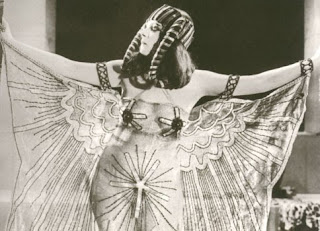
While costumes could elevate the movie, censorship caused by the condemnation of a costume deemed too revealing virtually guananteed the movie to be a success. An early example of this was Theda Bara filing a lawsuit for $100,000 against the Chicago censorship committee Better Films Committee of the Women’s Club of Omaha for refusing to give the movie (Cleopatra - 1917) a permit. The film, of course, booked solidly and grossed over a million dollars.
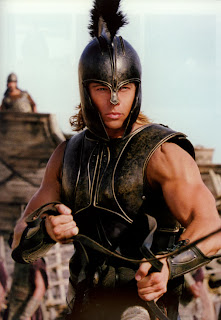
Film makers knew costumes helped to promote a sexual dialog between the stars and their adoring fans. This continued for years and still does. Women drooled at a bare chested Rudolph Valentino in The Sheik (1921) or Clark Gable in In Happened One Night.(1934) and at Brad Pitt in Troy (2004) The Gable film caused a drop of 30% in the men’s underwear market when he undressed and was not wearing an undershirt.
“We clearly found the formula for success in these romantic comidies of marrage and entrigue laced with a series of handsome leading men and a never-ending parade of fabulous gowns.” Gloria Swanson
“I want clothes that will make people gasp when they see them. Don’t design anyting that anyone could buy in a store.” Cecil B. DeMille.
As society has changed (particularly after WWII), movies have changed. With each decade, society has found itself examined in film and as fodder for stories in film. As stories in society have changed and evolved, characters are more dynamic and three-dimensional. Beside the need to be entertaining, films have needed to be more real whether the story is biographical or fictitious. Plot and plot structure has become more complex and strategic. The requirements placed for the costume, physical or emotional, are more demanding than in early films. As film viewser, there is a need to see the upside of a character as well as the dark, complex human frailties that make up the character. There are levels of sub-text that need to be conveyed in a costume that give depth and meaning to the characters as well as propel the storyline. A costume, and at times lack of one, gives a film an tension that heightens the anxiety of the watcher. The audience too can also be part of the film… in the sense that the character becomes easily identified with. The viewer feels that they know instinctively the motivation of character just by viewing what he/she is wearing. They become to identify with the character and at times, the viewer is one with the character. Traveling the film journey together.
“I really prefer not to play glamorous women in movies because my heroes in film, for the most part, are usually people that you wouldn’t know unless someone like me brought them to the screen, like everyday people… It’s about the reality of people’s lives and getting inside them, and letting you see what’s going on and how much the character is like the person’s that watching.” Cher
As our movies have changed, fashion and how we act as consumers have changed. The film viewer sees him/herself in the movie’s characters attempt to try to. So in turn, they act out by taking the lead or suggestion of the costume designer by following a style presented on a character in a film. That may include running to the shoe store to buy a pair of Manolos (Sex in the City) or cutting the neck ribbing off a sweatshirt like Jennifer Beal’s character in Flashdance.
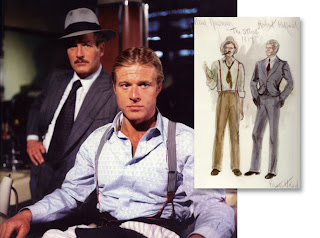
The audience looks at the fashion in movies and the character arc and development and decides to take a risk. Many times the risk is successful as the fashion is what society is waiting… primed for a new fashion experience. The trend of men wear band collars after the movie The Sting or the rush of white suits after Saturday Night Fever are just a couple examples. Whatever the case may be, film shapes our society. The costumer applies his/her skill and craft can either reflect or challenge society’s views of fashion in their critique of it on the screen.
Deborah Nadoolman Ladis. Dressed. A Century of Hollywood Costume Design. 2007. Collins Design. Harper Collins Publishers NY
W. Robert LaVine. In a Glamorous Fashion. 1980. Charles Scribneer’s Sons. NY.

Maureen Reilly Hollywood Costume Design by Travilla Schiffer Publishing Co. Atglen, PA
Dale McConathy Diana Freeland. Hollywood Costume. Glamour! Glitter! Romance! Harry N Abram, Inc. Publishers Art NY
God and the Christian movie industry.http://abcnews.go.com/Nightline/story?id=7765255&page=1
One final thought: Growing up in rural Michigan. Movies and fashion were really a wonderful escape. One of my fondest memories was watching movies and also that of my dad taking me to the city library (the library was an hour away.) They had the most splendid book called Hollywood Costume. Glamour! Glitter! Romance! It had a gold brocade cover and lots of beautiful color photos. Everytime I went to the library I checked out that book. I had the book out so many times, the librarian would just laugh as my dad would roll his eyes. I think I was about 8 or 10 at the time. About 30 years later, I was in the library and looked the book up. It turned out there were only two people who ever had a chance to check out this book for four years … me and someone else.
Sunday, November 15, 2009

History as inspiration

Movies are a wonderful escape from the everyday work life. A really good film transports a viewer away from the theater and into a world that can be charming or scary, plain or beautiful. The plot crafts a sense of wonder and anticipation with a conclusion that leave one satisfied. I prefer films with panoramic vistas and intense visual beauty. Moulin Rouge and Phantom of the Opera caught my attention. I was captivated and saw each of them multiple times just for the visual stimulation factor alone. One scene in Phantom had the main character singing in a most captivating gown with stars in her hair.
Years later, I happened upon the source for the costume designer’s inspiration. It was a painting of Empress Elisabeth of Austria, (a.k.a., Elisabeth of Bavaria, Queen of Hungary, or simply, Princess Sissi) as depicted by Franz Xaver Winterhalter in 1865. The costume designer had taken liberties with some aspect of the costume (as did the painter I am sure). Both painter and costumer were able to capture the essence of a feeling/mood that they wanted to convey visually through the clothing. Fashion designers work to do that as well.
Many designers scour the libraries, art galleries and museums to find sources for inspiration for their next collections. Historical dress is one area of that is an unending fountain of rich inspiration. This is particularly true in high end ready to wear and couture. These area of garment sales offer the opportunity to use custom beading, embroidery and unique and special fibers. Many of these supplies are too expensive for mass-market garments. The luxury market offers more opportunity to use these supplies but also they demand more creativity and artistic liscense so one does not seem to be wearing a costume. Here are some recent collections and how they leveraged a source garment to make it usable for today’s wearer.
The Maharaja’s of India come immediately to mind in the collection by Alexander McQueen. His Ready-to-wear collection for Fall 2008 was a mix of embroidey and beading fit for royalty. I was actually quite surprised at the price point on some of these garments. The dress red dress on the right was only $3500 at Saks. OK – while not exactly a bargain, it did not require the princely sums that one would think.

His pre-fall 2009 collection was no less over the top, but took inspiration from the Dickens area of the industrial revolution. It has fiercely tailored suits and jackets but also some fun vest paired with leggings.
The collection was not so much a collection inspired by Oliver Twist’s orphan boys but more inspired by the wealthier citizens of London. Broken apart, the pieces could be also mixed with jeans or other business wear to make a practical addition to a wardrobe.
Also part of his Fall 2009 collection was a homage to the everyday blacksmith. The garments used in blacksmithing go back hundreds of years. These garments could of easlity been around in the 1760’s all the way to the 1950… perhaps even today. Leather vests and aprons were a practical way to prevent getting burned, Today’s foundries utilize modern day flame and heat resistant textile discoveries.
Jean Paul Gaulter Fall 07 Couture and Haider Ackerman Fall 2009 must have gone to the same source library. Both seems to have discovered the collection of Coachmen uniforms at the V&A This one in particular is Russian and from the 1850’s. Both seemed to pick the garment apart either utilizing its incredible fringe detail or the chest/cuff embroidery.
Both collections seem to have a historical reference but fall way short of making the appear as part of costume. Any of these pieces would be a happy addition to a wardrobe but also because it is undated, be worn for years,
1725 opera singer costumers were a source of inspiration for Alexander McQueen in this RTW 2008 garment. The source garment was originally worn by a man but this reincarnation was more suitable for a woman. 300 years later, the garment still works minus the arias.
Haider Ackerman presented a fall 2009 collection that was punctuated by embroidery and draped leather. Originally from the workrooms of John Galliano, Ackerman has a unique design flair that comes from being a Frenchmen living in Columbia and other parts of the world. He takes a very draped approach to fashion but has been exposed to many sources of ethnic and historical dress. This collection takes inspiration from vintage and contemporary matador outfits.
One sad note about doing the research on this collection: it has always been on my bucket list to actually try my hand at bullfighting. I’ve been to Rondo, I like the suit and am actually on a wait-list for matador school… yes there really is such a thing. There actually happened to be a very good school in Salamanca – the pretty town just northwest of Madrid.
But after finding a rather large collection of images including a videos of matadors being trampled/pummeled or pierced by bulls during a match, I have decided to nix the idea of going to bullfighting school. One site in particular noted how one (ahem… 50 year old) amateur bullfighter was punctured and tossed around by a bull… It was so not pretty.

Monday, November 9, 2009

Sketching vs draping

This is a hot button for me. Designers that sketch an idea verses those that take fabric and apply it to the stand (dress/body form) and drape. In my mind, this boils down to skill. Can a designer who ‘sketches’ actually make the garment they design? In many instances, the answer to that question is no. Many, many designers come to fashion with the idea they want to “design” and then hand off the ‘work’ for execution to someone else. Then again, there are those who know the “process” and can do both. Balenciaga is an excellent example of someone that could do everything… and did. He had vision and he had “skill” from years of sweat and ‘work’.

There is a remarkable difference in the final outcome of a garment's design whether the designer knows how to drape vs sketch. To be blunt, I think it requires a different part of the brain. The part of the brain that is used for sight is not the same part that executes algebra or balances a checkbook. So which part of the brain is used to “sketch” vs “to drape”?

In draping, a designer takes into account the tactile feel and hang of the fabric. They must contemplate the three dimensional form of the body and the interplay of the fabric. Expertise is needed to take the design off the stand and translate the molded fabric into a flat pattern Granted, this part of the process may be handed off to someone, but draping fabric requires more physical energy than sitting and pushing a pencil. To be blunt again, the designer has to get off their #$%^& and pay attention to the body and the fabric on it. This simple (and not so simple step) gives totally different results because the designer is more involved in the “process”. OMG. There is that word again.

So maybe I sound just a tad catty here. I do not mean to down play the labors and vision of designers like Valentino, YSL, Pauline Tregere, etc. To be fair, these people were trailblazers. They invented the manufacturing process for the mass market AND at the same time created a line or silhouette that was novel. They also had to create it in a world without cell phones. They looked at the cultural context of society and how clothing was worn and developed new shapes. They had to deal directly with labor issues without the crutch of sending it to the far off sweat shop. With today’s fashion, much the clothing industry seems to be taken over by stylists, pop stars and marketing agents… but not designers.

There is a “process” in the sketching arenas of design. Sadly, it is one that has evolved over time, my guess, by having to work with clients/supervisors/vendors that lacked vision. A sketch translates the design instantly. What you see is what you get. Revisions are faxed or emailed back and forth to the supplier. Some poor grunt has to execute the garment for a buck. Currently 95% of everything we (Americans) "design" in clothing is really made in China. The designer celeb takes a mark up. But can you always put a drape and twist of fabric into a sketch to send to someone? Will they "get it"? Can the new off-shore factory translate the sketch?

Take a look at sketches from many well-known designers. A sketch from YSL, as primitive as it may be, gets the concept across. I can see how the garment is going to look. Valentino is another. I get the concept. Oleg Cassini, no contest. I get it. It is the same with others. These designers had the staff on hand to pull of whatever they drew. Do these garments really react and relate to the body? Are they gimmicky? Perhaps. But I get the concept.


A Quick fashion history lesson.
Vionnet is the known as the originator of bias cut. Gres is known for taking the draped garments to a new level inspired by the Greeks. Both are shown here and both influenced many other designers. Both women draped their own designs. In the case of Vionnet, she did her designs in half scale on a doll and scaled them up when she was satisfied with the idea. Gres executed her work alone in a room with no one else but a real life model. She worked like a sculptress molding her clay. Dior, Balenciaga and Fath were contemporaries of Gres. Later designers like Versace and Halston held these two women in high esteem and tried to emulate their footsteps while adding to the conversation themselves.

Their clothing designs work in tandem with the body. There is an interplay with the body and the fabric. Is it always practical to wear? No. Just like it is not always practical to wear blue jeans and t-shirts. But the range and scope of the creativity is worlds apart from those that just
“sketch”. I may not always know where they are going with their dialogue on the evolution of their designs, but I get the concept...they are executing their craft. I get it. I am thrilled to take the creative journey with them.

So, ask yourself this, who will do a better job in designing a collection of clothing? A fine artist/painter/designer like for instance, Ralph Rucci of Chado or perhaps.... Victoria Beckham aka Fuzzy Spice or whatever her name was. Rucci is a painter and can sketch, but he also drapes and has been refining his craft for over 20 years. He is known for unusual seaming and a refined technique. Freaky Spice is known for.???? Oh yeah, she married the hottie soccer player and does underwear ads with him. Yeah. That it. Got it.


Steven Bluttal, Patricia Mears. Halston. Phaidon Press. NY 2001
Harold Koda. Goddess: The Classical Mode. Metropolitan Museum of Art . NY 2003
Valerie Steele, Patricia Mears, Clare Sauro. Ralph Rucci. The Art of Weightlessness. Fashion Institute of Technology. NY 2007
Caroline Rennolds Milbank. Couture. The Great Designers. Steward, Tabori & Change, Inc. NY 1985
Pamela Golbin. Valentino, Themes and Variations. Rizzoli USA. NY 2008
Florence Muller, Hamish Bowles. Yves Saint Laurent Style. Abrams. NY 2008
Richard Martin Giuanni Versace. Metropolitan Museum of Art & Abrams. NY 1998
Pamela Golbin Madeleine Vionnet Rizzoli USA. NY 2009

Sunday, November 1, 2009

Tie one on!

I dedicate this column to my good friend Dr. Russ Rogers. While shopping at Macy’s, the sales clerk behind the tie counter quite bluntly told him he had old-fashioned taste in ties and to step it up a notch. She was 90.
The necktie. It’s a source of unfounded hatred in most men. One could say its origins go back to 210 BC in China. But this early precursor does not look anything like the hangman’s noose of today. The early versions look more/less like a neck scarf that we could wear in winter or what we could think of as a cravat. Chinese emperor Shih Huang Ti was buried with an 7,500 life-size terracotta replicas of his famed fighting force ment to guide him to the afterlife. Each of the 7,500 figure are different except in one respect: all wear neck cloths. It is thought that this necktie was symbol or gift to the soldiers from the leader for bravery.
In 113 A.D., Roman Emperor Trajan erected a marble column to commemorate a triumphant victory over the Dacians. This tower-like column contains 2,500 realistic figures with three different styles of neckwear. Again, the necktie seemed to have been a symbol for bravery and symbolizes the warrior. While Roman soldiers did not cover their necks (Horace and Seneca wrote only effeminate men covered their necks), legionnaires or truly great fighters that were skilled in battle and therefore immune to perceptions of appearing feminine… or in our world “gay”.
Louis XIV of France liked the colorful silk kerchiefs worn around the necks of Croatian mercenaries. The King thanked the fighters in 1660 for assisting in a victory against the Hapsburg Empire. Some experts believe the French word for tie, cravat, is a corruption of “Croat.” Other suggest cravat is derived from the Turkish word kyrabacs, or the Hungarian, korbacs, both meaning “whip” or “long, slender object.” Regardless, the elegant French courtiers, and the military immediately began copying the Croatians.
Also in 1660, King Charles II returned to England and reclaimed the throne that had been lost during the Puritan revolution and "Old Ironsides" Oliver Cromwell. The exiled aristocrats returned to England and with them brought a passion for the European court trappings. The stylish cravat was popular for those who could afford it. King Charles II is said to have once spent 20 pounds and 12 shillings on a single cravat. This was as much as five times an annual middle class salary. Bet he didn't spill gravy on that one.
Art museums throughout the U.S. and Europe are full of paintings from the 17th and 18th centuries showing generals, politicians, and aristocrats resplendent in their lace, ribbon, and embroidered cravats. Around 1800, prizefighter Jem Belcher took to a colorful bandanna or neck scarf. Working class Englishmen by thousands were wearing colored bandannas as lace was expensive and the colorful scarf was seen as a more practical approach to fashion.
Derived from the Sanskrit word, bandhna, or bandhana, meaning "tying", bandannas were first imported from India around 1700. The original bandannas were silk and came in an array of colors. Howdy Doody lost something in the translation,
Someone I have written of before, George Bryan "Beau" Brummell before. He advocated well-cut, tailored clothes that were void of frills. Brummell rejected lace and preferred somber black suiting with a crisp white cravats. Anal to a fault, Brummell would change his cravat as often as three times a day so they were perfect. The simplicity of Brummell's uniform was adopted by nearly everyone from the working class to the upper echelons of royalty.
Designed by Teenagers… eeeeeeewww.
The I Zingari Cricket Club, founded by a group of Cambridge University students in 1845 is believed to have created the first sporting colors. In 1880, the rowing club at Oxford University's Exeter College One men's club, invented the first school tie. It was essentially a hat band from a bowler. Later in the semester, when guys ordered their hats, they ordered an extra band to use as a necktie. As they matured into gentlemen, such ties had enormous appeal to the vast Victorian middle class. In the industrialized society, men wanted to stand out, assert social superiority, or proclaim allegiance to a group. The necktie became a symbol of associations.
A COUPLE OF SIDE NOTES
The bow tie gets is name from the French, jabot, (pronounced ja-bow), a type of 17th century lace cravat. In the 18th and 19th centuries, bow ties came in various materials and styles. White bow ties were considered formal, but casual wear was multicolored. The black bow tie (or black tie as we know it today) dates to 1886, when Pierre Lorillard V (or his son, Griswald Lorillard known for creating a stir by wearing unorthodox and outrageous clothing) invented the tuxedo as an alternative to the tailcoats worn with white bow ties. History is a bit fuzzy here. Somehow or in someway, one of the two gentlemen showed up to the1886 Tuxedo Club's Autumn Ball and made a stir. Pierre Lorillard V was the man who brought yacht racing to New Port, RI and was highly respected in Victorian Society. He was the man who sold the Breakers property to Cornelius Vanderbilt II. My money is on the kid.
When is a tie not a tie?
In 1940s, Victor Cedarstaff went riding outside Wickenburg, Arizona. When the wind blew his hat off, Cedarstaff removed the hatband. The hat band had a silver buckle that he did not want to lose. He put it around his neck. Friends liked his new tie. Cedarstaff returned home and later patented the new neckwear, which was called the bolo because it resembled the lengths of rope used by Argentine gauchos to catch cattle. In 1971, the Arizona legislature named the bolo the official state neckwear… there is just no accounting for taste. Sorry folks, it is just too ugly to post on my blog.
In the American south to wear lace or silk cravats was just too messy and hot. However in the early 1800s, plantation owners displayed their social superiority by wearing wide ribbons tied in bows. These became know as Plantation Ties. River gamblers, Mark Twain and Colonel Sanders adopted this look… anything to sell a bucket of chicken.
Finally Paris fashion designer Jean Patou invented the designer tie in 1920. A smart marketer, Patou targeted the women purchasers. Today women buy 80 percent of ties sold in the US. That is why ties are often displayed near the perfume or women’s cosmetics. Statistics show that the tie is an impulse purchase.
In 1924, American tailor named Jesse Langsdorf created--and patented--the tie's modern look, with its bias cut and three-piece construction. Regular four-in-hand ties run the gamut in length from 55” to 58”. Big and tall ties are longer.
Prior to designing clothing, Ralph Lauren was a tie salesman. He launched the heinously ugly 4-in.-wide (10 cm) trend in the 1970s.
The tie of today
A quality tie has a good outer shell fabric of silk and proper interlinings. Finer ties are lined with 100% wool. Most other quality ties use a wool mixture. The finer ties have a higher percent of wool content in the lining and a 100% silk outer. Cheaper ties are polyester or a poly silk. Finer ties are also hand made, not unlike a bespoke suit. The highest quality ties are those that are called “seven-fold” ties. These is made from a square yard of silk folded seven times, and do not require any lining.
The proper width of a tie, and one that will never be out of style, is 3 1/4 inches (2 3/4 to 3 1/2 inches are also acceptable). As long as the proportions of men's clothing remain true to a man's body shape, this width will set the proper balance. Thus fat men can wear wide ties, however it is not ment to be a bib. Standard neckties come in lengths anywhere from 52 to 58 inches long. Taller men, or those who use a Windsor knot, may require a longer tie. After being tied, the tips of the necktie should be long enough to reach the waistband of the trousers. FYI, a necktie is really easy to make. I encourage people to try sewing one as it is a great first sewing project.
Auf Wiedersehen to the necktie?
The turtleneck could be called the anti-tie. British writer Noel Coward started wearing colored turtlenecks in the 1920's and created a new fad. French intellectuals and their counterparts in the United States popularized black turtlenecks in the 1950s.
Later in the 1970’s, Photographer Victor Screbneski popularized this again by photographing celebrities in black turtlenecks.
U.S. market share for American-made ties has fallen to about 40% today, from a high of 75% in 1995. U.S. sales of ties have plummeted to $677.7 million in the 12 months ending March 31, from their peak of $1.3 billion in 1995. This trend of the dying necktie was evident when some members of the Men’s Dress Furnishings Association attended the group’s annual luncheon in New York. A number of people turned up sans tie.
OK..... A Major Peeve.
I really don’t mind wearing a tie. When society pressures force me to wear one like working at conservative office environment or black tie function, I usually go out on a limb and wear something truly outrageous. I have a transparent sequin encrusted tank top that I sport with my tux. My philosophy is simple: more is more and subtle is boring. But in a general sense, a tie can make a guy look pretty cleaned up, presentable and, in some cases, even smart. Most experts agree that one should not send a necktie out to be dry-cleaned, they will completely #$%^&* it up. While dry cleaners may be able to remove spots, once they press the tie, the idiots compress the lining and dull the luster of the silk. I hate it when drycleaners press a tie. I have two suggestion should you take your tie to the cleaners. First off, tell them “You press it, you bought it.” When that fails, take the lead of dancer Fred Astaire and use it as a very expensive belt.
A special thanks to:
David Johnson, 2,000 years of the necktie
(he knows everything there is to know about neckties) check out his writings at:
Neckwear Association of America
Sarah Giddings , The Tie, Columbia Encyclopedia, fifth edition; Time Almanac, 1999
The Last Resorts, by Cleveland Amory
http://www.neckties.com/
FINALLY - Yes a tie can look sexy as seen in the images below.